
Washington County Bench Warrants Explained
Nebraska describes a bench warrant as an order from the judge to arrest a person. In Washington County, the common triggers are a missed appearance, failure to pay, time-pay noncompliance, contempt, or a release condition that was not completed. Child-support contempt has its own district-court motion and proposed-warrant route.
The label belongs to the underlying court case. A bench warrant is not a new finding that replaces the original charge, and the sheriff's active list may use the broader phrase “active arrest warrants.” Ask the issuing clerk which exact order and next hearing control.
How Washington County Bench Warrants Are Issued
The case has a scheduled appearance, payment duty, or compliance order. If the person does not appear or comply, the judge or magistrate enters the arrest process, and the clerk records the order in the register. An authorized officer may then execute it. The current action, recall, bond, or next hearing must be confirmed in the court record.
Washington County has no public bench-warrant export or separate bench-warrant search form in the official sources reviewed. Use JUSTICE for the case layer, the sheriff PDF for its snapshot, and the issuing clerk for the live answer.
Use the Washington County Court contact, the District Court clerk page, and the sheriff's active-list page to separate a docket question from a service question.
FTA and Failure-to-Pay Triggers Here
Traffic, misdemeanor, and ordinance matters generally stay with Washington County Court at 1555 Colfax Street in Blair. The clerk can explain whether a missed appearance, unpaid amount, or time-pay order created the warrant. A city citation may begin with Blair, Arlington, Fort Calhoun, Kennard, Herman, or another local office, but the County Court register is the key status source.
The sheriff's page says online bond payments are not allowed. Do not assume that paying a citation online after a warrant issues recalls the warrant. Ask the clerk what payment, appearance, or motion is required.
Bench Warrants and Arrest Warrants Compared
A bench warrant grows from a missed court duty in an existing case. An arrest warrant begins with a complaint, sworn affidavit, and probable-cause review. Both authorize arrest, but the trigger, record path, and response can differ. See arrest warrant search for the complaint and service side.
| Feature | Bench Warrant | Arrest Warrant |
|---|---|---|
| Trigger | Missed appearance, FTA, contempt, or nonpayment | Complaint and probable-cause showing |
| Who issues it | Judge or magistrate in the existing case | Judge or magistrate on the complaint |
| Underlying record | Existing County or District Court case | Charging process and arrest order |
| Resolution path | Recall, vacatur, hearing, payment, or bond | Appearance, surrender, bond, and case hearing |
Resolving a Washington County Bench Warrant
The issuing court controls recall or vacatur. Confirm status with the clerk before appearing, and ask a Nebraska attorney whether a motion, payment, reset, voluntary appearance, or bond is safest for the case.
- Confirm the current warrant, court, case number, and trigger with County Court or District Court.
- Ask counsel and the clerk about a motion to cancel, recall, or quash and the requested hearing date.
- Ask whether the court permits an arranged appearance, payment, reset, or bond process. No public source promises a walk-in window.
- After action, obtain the docket entry showing recall, vacatur, service, or the next hearing.
Caution: Do not test a bench warrant at the Justice Center or during a traffic stop; call the issuing court first and ask what procedure applies.
Finding the Court That Issued the Warrant
Washington County's local split is County Court versus District Court, not a separate justice-of-the-peace or municipal criminal layer. County Court handles city and village ordinances, traffic, misdemeanors, infractions, and felony preliminary hearings. District Court handles general-jurisdiction felony matters and district contempt.
Use the county warrant lookup and JUSTICE to identify the case. Then send recall questions to Vicki Kuhlmann's County Court office at (402) 426-6833 or Susan K. Paulsen's District Court office at (402) 426-6899. The sheriff executes process but does not decide whether the court recalled it.
Rule 1-8 and the 24-Hour Filing Detail
Sixth Judicial District Rule 1-8 says motions to cancel contempt and FTA warrants should be filed at least 24 hours before the requested hearing. The assigned judge or courtroom 228 judge may hear the request in the afternoon. The same rule says an active arrest warrant cannot simply be cancelled under that provision, though a judge may set bond.
Read the current rule with the clerk because a case-specific order still controls. The timing is not a promise that a motion will be granted.
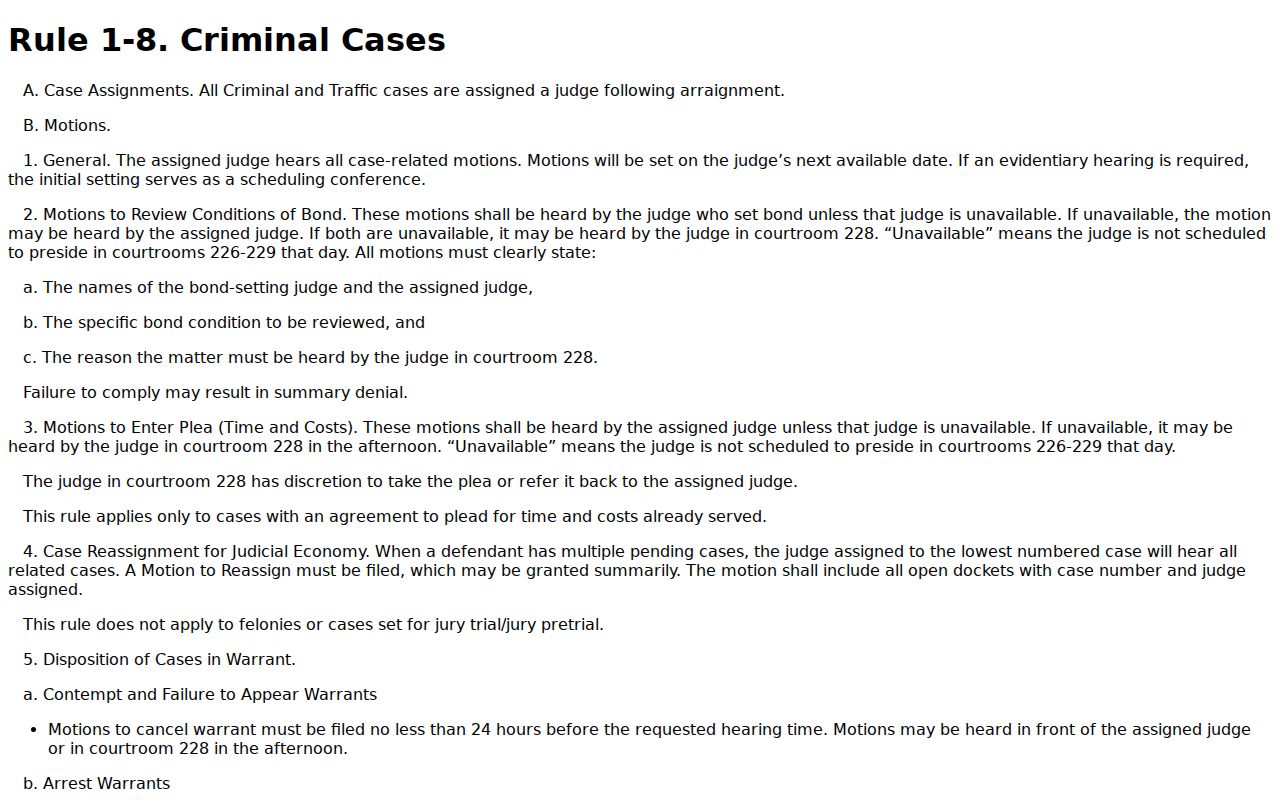
The rule capture is useful for the filing concept, but only the court can say what a particular case needs.
Bench-Warrant Record Anatomy
When reading a register, look for the case number, court level, warrant or FTA label, order date, missed hearing or payment event, offense type, issuing judge, bond or release condition, recall or vacate date, next hearing, and clerk instruction. Exact Washington County status codes were not published, so plain words in the register matter more than a guessed abbreviation.
| Current status | Ask whether active, recalled, vacated, quashed, served, or returned is current. |
|---|---|
| Next action | Ask for the hearing, motion, payment, bond, or compliance step and the receipt or docket entry. |
Child-Support Contempt Uses a District Route
A child-support bench warrant follows a district-court contempt process. Nebraska's proposed form includes the case number, parties, county, contempt order date, jail county, and judge signature fields. It is submitted with an affidavit and motion through the District Court clerk, not through a traffic payment page or public sheriff search.
Ask District Court clerk Susan K. Paulsen at (402) 426-6899 or counsel which hearing and purge-plan procedure applies. Do not assume a County Court payment resolves a district child-support matter.
Time-Pay Compliance Under Rule 6.1
Sixth District Rule 6.1 describes a limited time-pay route: if a failure-to-abide warrant exists and the person comes into compliance by paying before arrest, the warrant shall be vacated under the rule's conditions. This is not a blanket amnesty and does not set a universal amount. Ask County Court how the rule applies to the case.
Keep payment separate from final case resolution. A warrant may be vacated while a traffic, misdemeanor, or ordinance case still has a next date or another condition. Verify the docket after payment.
Nebraska traffic guidance provides the state-level flow and cash-after-warrant warning used for this local explanation.
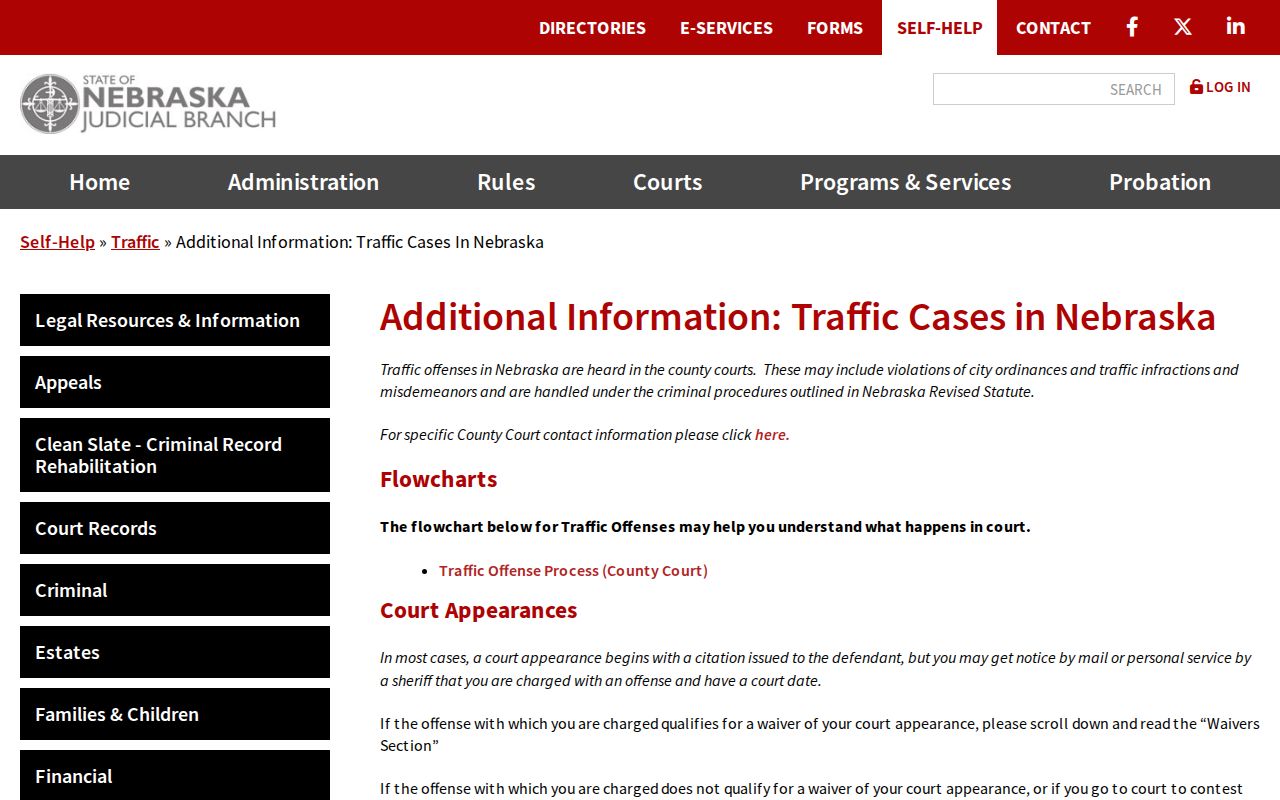
The flowchart is a process reference, not a Washington County person-level warrant list.
Sixth Judicial District Rule 6.1 supplies the current time-pay and warrant-vacating language.
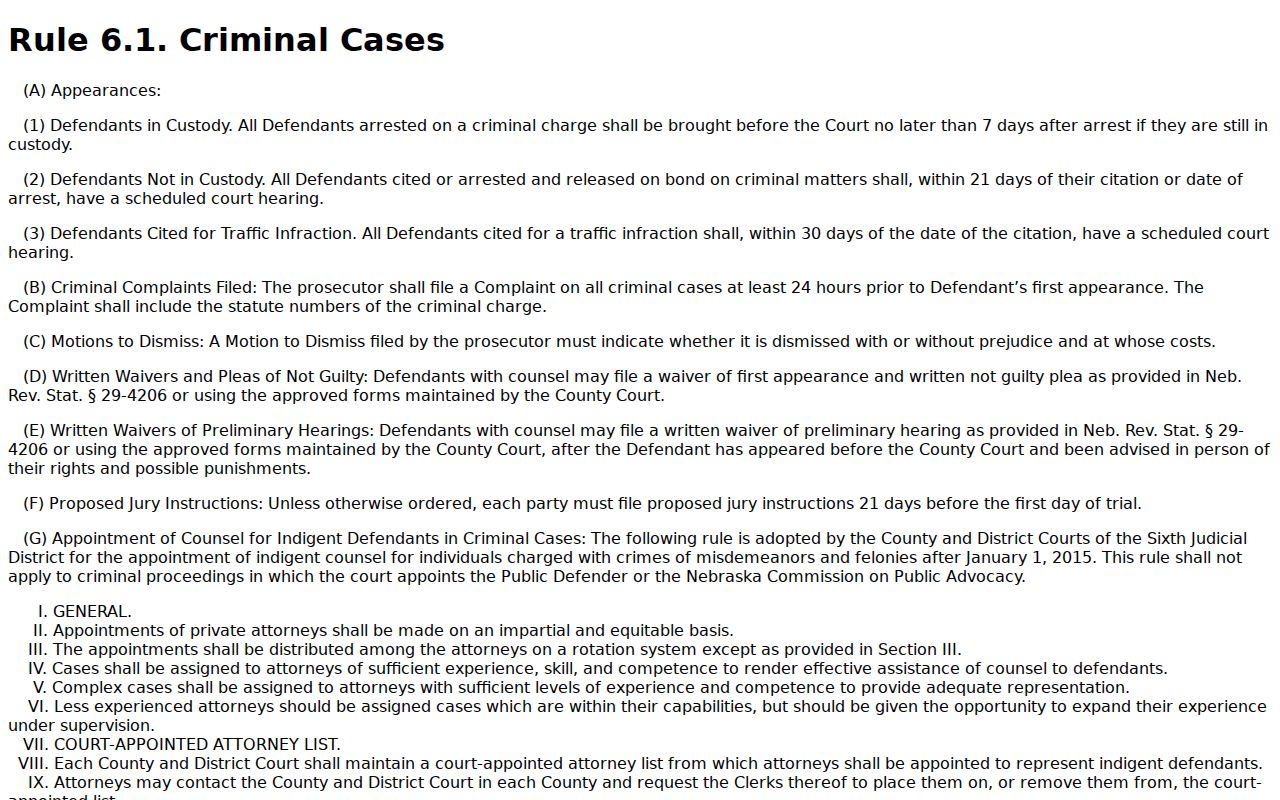
The rule image belongs beside the explanation of compliance, not beside any individual record.