
Washington County Arrest Warrants Explained
In Nebraska, a criminal case usually starts with a written complaint. A magistrate reads it and can issue a warrant once the legal grounds and the probable-cause showing hold up. The signed order then lets an officer bring the accused before the proper magistrate. The county path here is court-centered. Washington County Court runs felony preliminary hearings, and any felony bound over moves to District Court for trial. Traffic matters, misdemeanors, infractions, and city or village ordinance cases stay in County Court. So a local warrant question turns on the right court level, and the clerk at that level holds the answer.
Inside a Washington County Arrest Warrant
Washington County publishes no local warrant-number format. Get the case number and court from the clerk, then read the accusation, issuing authority, bond terms, and service details as one order.
| Case identifier | COURT-CASE-NUMBER, use the actual number from the court rather than a guessed pattern. |
|---|---|
| Accusation | The offense described in substance, with charge class or case type when public. |
| Issuing authority | Judge or magistrate and County Court or District Court. |
| Bond or release | Personal recognizance, cash, 10%, surety, corporate surety, or a case-specific condition. |
| Direction | The sheriff, city or village officer, or other authorized officer named to execute process. |
| Status entry | Active, served, returned, recalled, vacated, quashed, bond, or next hearing in the docket. |
Arrest-Warrant Fields to Verify
A full court file can tie a warrant to the complaint, the affidavit, the probable-cause review, the judge, the offense, the bond, and the service return. A sheriff list or jail roster shows far less. A charge line, a booking entry, or a photo proves nothing about current status. Ask the Washington County clerk for the case number, the order date, the issuing judge, the current warrant entry, the bond condition, and the next court date. If a document is sealed or tied to an investigation, ask only for the public portions Nebraska law allows.
Serving Arrest Warrants in Washington County
Nebraska law directs an arrest warrant to the sheriff or another authorized officer, and it can be executed anywhere in the state. The Washington County Sheriff's Office, Blair Police, the Nebraska State Patrol, and other authorized agencies may all serve process depending on the order. After an arrest, the person goes before the proper magistrate, and the court sets bond or another release condition. The Justice Center handles booking and custody, but its jail roster is no warrant archive. For an outstanding warrant, call the sheriff with operational questions and the issuing clerk for the order, a recall, the next hearing, or the case record.
Sheriff, Police, and the Return
A warrant names or directs an authorized officer to execute it. The Washington County Sheriff serves county process and runs the Justice Center. Blair Police can execute a local order, and other agencies join when the order reaches outside the county. The officer's return then records what happened after service. Booking at the Justice Center collects fingerprints, photographs, charges, medical information, and bond, yet those custody fields come after arrest and say nothing about the order or its recall status. For confirmation, compare the County Court contact, the District Court clerk page, and the sheriff's active list to see which office holds the current answer.
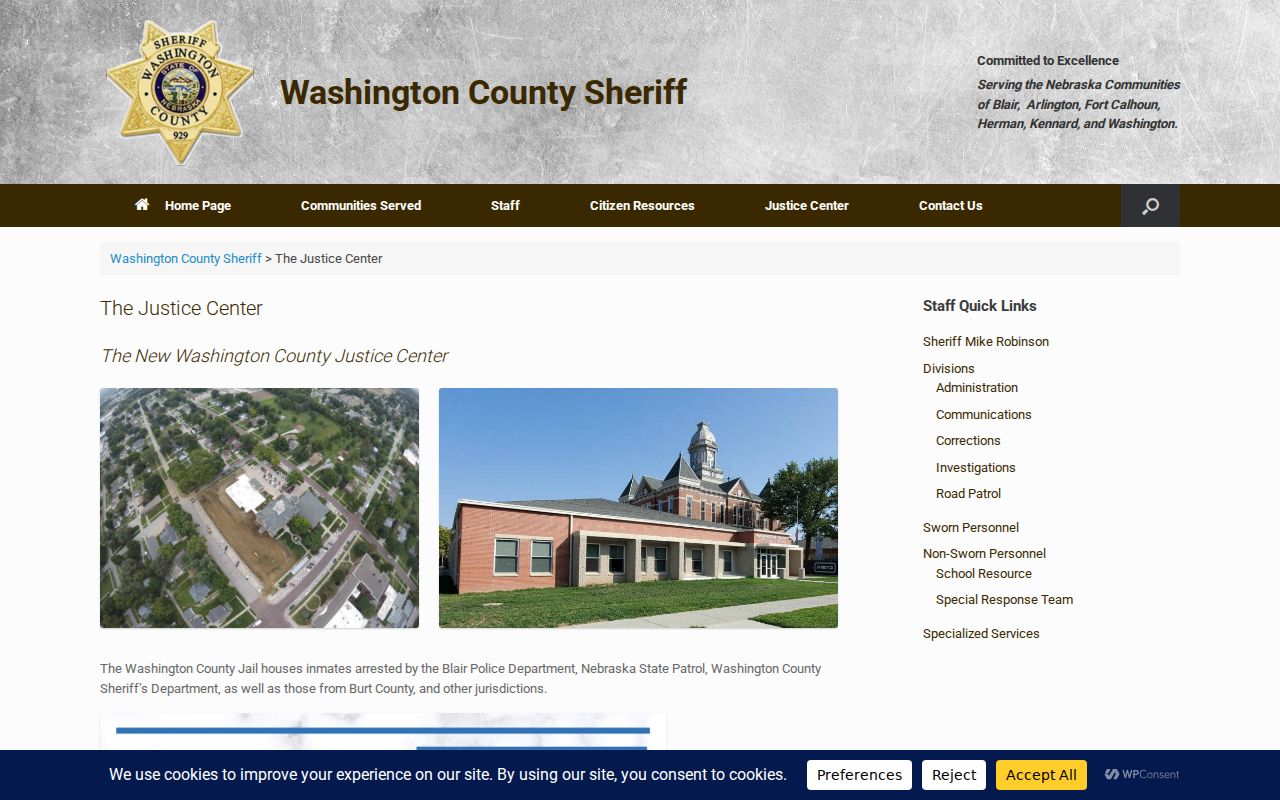
The Justice Center page lays out the custody handoff after arrest, but the issuing clerk still controls the Washington County court record.
Probable Cause, Complaint, and Clerk Filing
The Nebraska Judicial Branch describes the pretrial sequence: a sworn officer affidavit, a complaint, and a magistrate's probable-cause review. The judge signs when authorized, and the warrant is filed with the County Court clerk. That filing is why a court register can offer more context than a sheriff PDF. Read the Nebraska pretrial process explanation beside the local court contact. It walks the state sequence, but it will not hand you a Washington County record.
Arrest Warrants, Summonses, and Bench Warrants
These papers serve different jobs. An arrest warrant allows custody after a complaint and a probable-cause review. A summons orders an appearance without an arrest command. A bench warrant follows a missed court date, contempt, nonpayment, or another obligation; see bench warrant search for that route through Washington County.
| Feature | Arrest Warrant | Summons | Bench Warrant |
|---|---|---|---|
| What it orders | Arrest and return before a magistrate | Appearance on a stated date | Arrest after a missed obligation |
| Basis | Complaint and probable cause | Charge or required appearance | FTA, contempt, or nonpayment |
| Who issues it | Judge or magistrate | Court process under the case | Judge or magistrate in the case |
| Response | Counsel, appearance, surrender, or bond | Appear as ordered | Recall, hearing, payment, appearance, or bond |
Arrest Warrant Versus Search Warrant
An arrest warrant lets officers take a person into custody and bring them before a magistrate. A search warrant is different authority entirely: it permits a search for specified property, evidence, contraband, or instruments of a crime. A search-warrant affidavit is not an active-arrest list, and it reveals nothing about anyone's custody status. Nebraska's search-warrant statute stands apart from the arrest provisions. Before asking the Washington County sheriff or clerk a status question, confirm which document type you actually hold.
Handling an Arrest Warrant in Your Name
Confirm the case and issuing court through JUSTICE, the sheriff's list, and the clerk. Then talk with a Nebraska attorney. Options include voluntary surrender, posting bond if the court sets one, or a motion to recall or quash when the law permits. Rule 1-8 bars cancelling active arrest warrants under its FTA motion provision, though a judge may still set bond.
Important: Talk with counsel and the issuing court before appearing; Washington County does not publish a guaranteed walk-in surrender window or instant release promise.
No Online Bond Shortcut
Nebraska's appearance-bond form lists personal recognizance, cash, 10% bond, corporate surety, and surety options, but the judge sets the amount and the conditions. Paying online is not one of the choices. Nebraska ePayments says bond payments cannot be made online, and the Washington County sheriff's payment page repeats that warning. For booking, bond, surrender, or hearing instructions, ask the issuing court or the jail, and never send money to an unsolicited caller. A citation payment is not a bond. It is not a recall, either. The Nebraska public-view rule keeps court filings open to the public unless law, rule, or order restricts them.
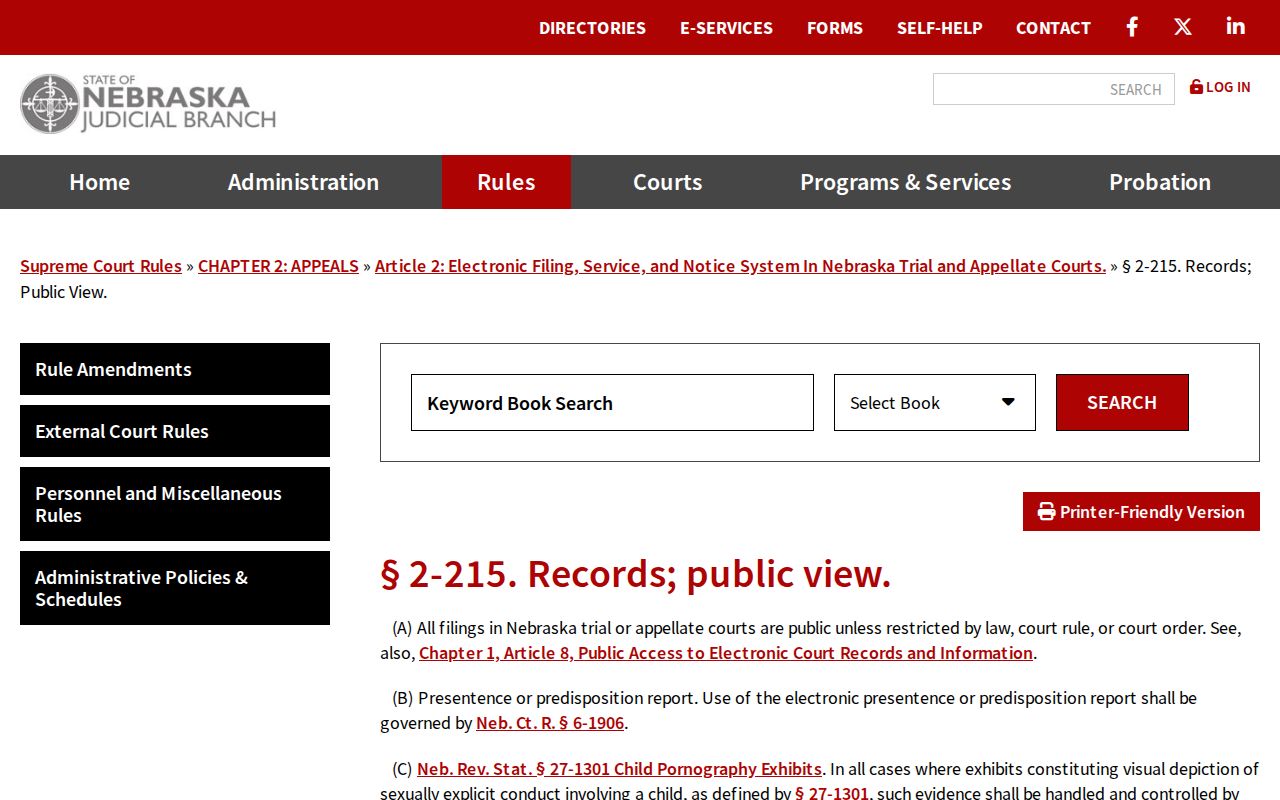
The rule explains the mismatch you may see. Clerk records and the Washington County sheriff's publication can carry different levels of detail.
Federal Matters Use a Separate Court
A Washington County sheriff list is not a federal docket. Federal case information runs through the U.S. District Court for Nebraska and PACER, with separate courthouse access rules. The U.S. Marshals District of Nebraska describes regional task-force work. None of that creates a county warrant record. Check the case number first. Ask whether the issuing court is state or federal, because that court controls the next step and the right search channel.